Showing posts with label Hilary Clinton. Show all posts

Friday, 28 October 2016

Celebrity Socionics: Donald Trump and Hilary Clinton - Conflicting Relations


I.

Do Donald Trump and Hilary Clinton like each other? Do they get along? Socionics says no, and that they wouldn't be compatible - in any sense - even if they weren't competing against one another in what has been one of the most bitter and acrimonious presidential election campaigns in US history.

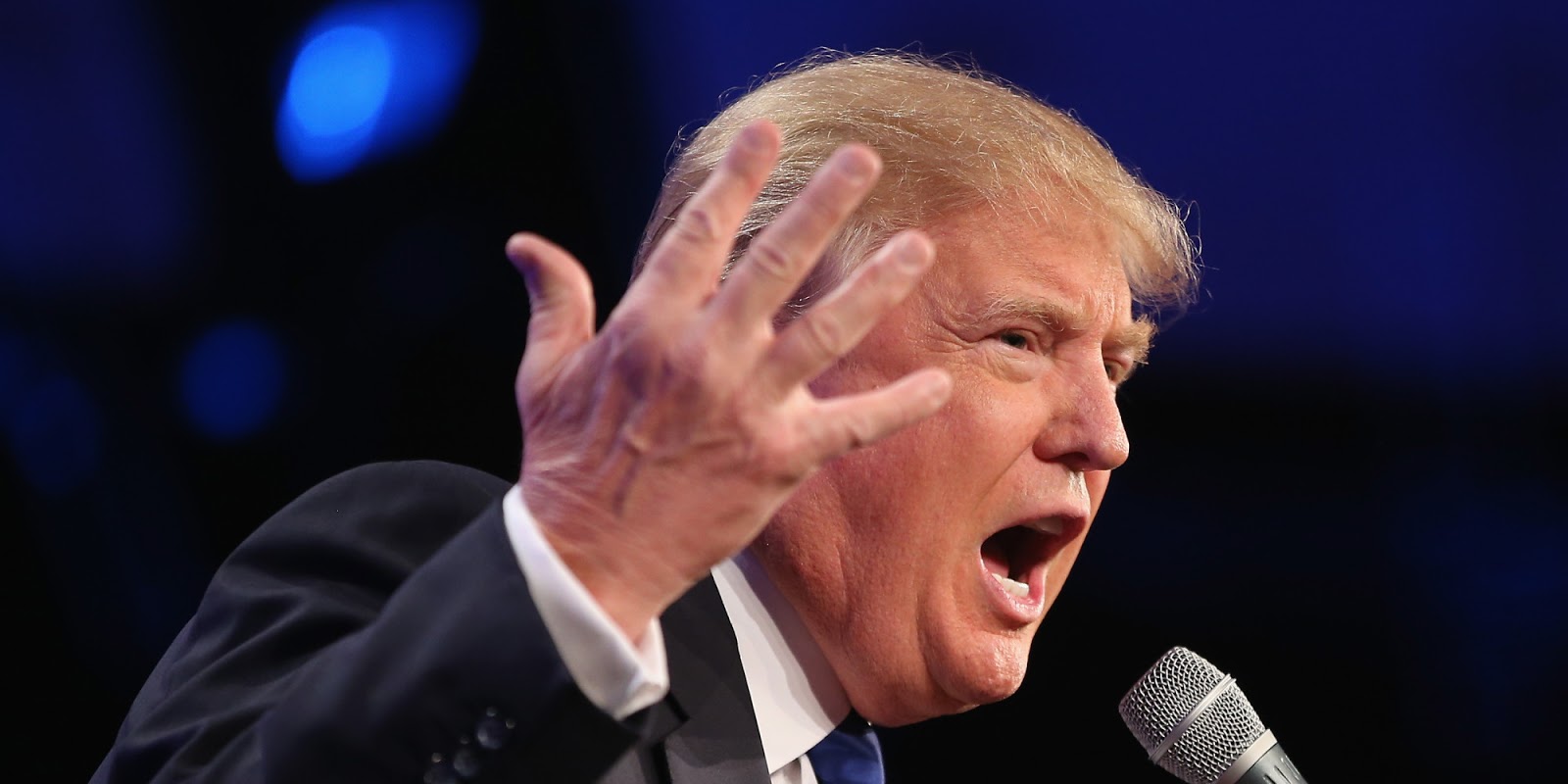
In an earlier post, Donald Trump is typed as an ISTJ, Clinton an ENFJ, using Rod Novichkov's visual identification method. Typing Trump as an ISTJ, and an introvert, may surprise some - I've seen him most typed as an extravert with extraverted sensing Se as a dominant function (that is, as an ESFP or ESTP). But statistics show that the ISTJ is one of your more typical types, and Novichkov's book types many celebrities - including ones who strike us as extraverted and outgoing, such as Robin Williams, John Travolta and Paris Hilton - as ISTJs.

We are, in our lives, more likely to bump into the types who belong to what Keirsey calls the 'Guardians': types who have Si as either a dominant or secondary function, and Fe or Te as dominant and secondary functions. These Guardian types - the ISTJs, the ESFJs, the ISFJs, the ESTJs - show up a lot in Novichkov's list of celebrities. On the other hand, ENFJs don't turn up a lot in Novichkov; Keirsey's 'Idealists' - the NF types, who have either Ni or Ne and Fe or Fi as dominant and secondary functions - there are few and far between. Novichkov claims that his samples of celebrity types reflect statistical reality, and I'm inclined to agree. I encounter plenty of 'Guardians' and few 'Idealists'. So it stands to reason that a billionaire real estate developer turned reality TV celebrity and presidential aspirant would be a 'Guardian' and not, for instance, one of the rarer, 'Idealist' types - e.g., an INFJ or INFP.

Socionics differs from MBTI in a number of respects. One of these is that it emphasises intertype relationships: each of the 16 types has a unique relationship with another which can be determined in advance. Some of these don't bode well for either friendship, romance, work, while others almost guarantee smooth and harmonious relations in any of those fields.

Trump the ISTJ and Clinton the ENFJ stand in a Conflicting relationship with one another. What does this mean? If look at the traditional Jungian dichotomies - Introvert or Extravert, Sensor or Intuitive, Thinker or Feeler, Perceiver or Judger - in the Conflicting pair Hilary and Donald, we find that these are diametrically opposed. Hilary's dominant function is a Judging or Rational one, Donald's is Perceiving or Irrational; Hilary is a Feeler, Donald a Thinker; Hilary is an Extravert, Donald an Introvert; Hilary is an Intuitive, Donald a Sensor.

Secondly, each of the other's leading function in a Conflicting pair - Si in Donald, Fe in Hilary - constitutes the vulnerable function of the other. While MBTI considers only four functions in a type, socionics works with all eight possible functions, and looks at the four functions in MBTI as 'valued' (that is, ones that a type will prize) and the four functions left out of MBTI as 'subdued' (that is, ones that a type will generally not value and not see the use for). The vulnerable function, which occupies the fourth slot in a type, is classified as 'subdued' and therefore not valued; in fact, a type will generally feel uncomfortable and distressed when that function appears in himself or others. In other words, use that function around him, and you will cause him irritation.

Sociotype.com gives a good description of Si in the ENFJ type. I think that it applies to Hilary, or at least what we know about her health and her habit of mislaying emails:

The EIE [ENFJ] is more likely to measure the comfortableness of conversation than other more physiological signs. Still, they are quite attuned to the physical sensations others are experiencing and use the information to raise and lower the emotional conditions that those individuals are experiencing. In any case however, EIEs are prone to making errors in daily routine. This can include having little or no idea of where they put an object, allowing neglected responsibilities to pile up, or failing to remember important tasks given to them; excessive procrastination is common in EIEs. The EIE has little respect for people who seem to be too concerned with their health and comfort and who avoid straining themselves. The EIE feels that people who focus too much on caring for themselves will have no time to achieve anything worthwhile.

The account of Fe as a vulnerable function in the ISTJ gives a perfect picture of Trump:

SLIs [ISTJs] are minimally aware of others' emotional responses and tend to speak in straightforward language. Sometimes they can appear aggressive and respond critically on issues in which they hold strong opinions. This can lead to the perception of SLIs as hostile and, on occasion, arrogant or uncompromising. Often, however, SLIs do not act in such a fashion; such aggressiveness is usually limited to issues in which SLIs are very opinionated -- these can include events in which their lifestyle has been threatened, or if something they require is functioning improperly in a way they do not fully understand.

Fe means, if anything, groupthink and paying attention to the emotional atmosphere and the morals and standards of one's particular group - or society in general. A type with Fe as a vulnerable function falls down in that regard.

Given the above, we can't expect Conflicting types to get along. Here's what sociotype.com has to say:

At a distance, conflictors may find each other interesting, but as they become closer are sure to notice a fundamental difference in their motives and point of view. They can only sidestep this by limiting their relationship to the most formal and superficial interaction possible in a given situation (the most natural psychological distance for this relationship is very long). When interaction is unavoidable, uncomfortable misunderstandings or, most often, a sense of awkwardness and ambiguity usually result, even when both partners have the best of intentions. When actual conflict occurs, conflictors tend to repeat themselves over and over without ever making themselves understood; thus, they are often not even sure why the conflict exists in the first place. Conflictors can have known each other for a very long time without having the slightest understanding of each other's motives. This makes true collaboration and intimacy difficult.

It is quite common for conflict partners at work or in other formal situations to make a point of being civil and friendly to the other and openly demonstrating their good will. In the process of doing this, they usually end up trying to engage one another's vulnerable function, but this only makes the other suspicious and withdrawn. Compare this to the suggestive function, which one readily allows others to engage and support. Because of their disparate life goals, conflictors seldom have the same interests, but when they do discussion of these interests can provide a means of interaction formal enough to not be impeded by socionic factors.

In other words, keep things at a superficial and formal level, don't go too deep, and you'll get along fine. That's been my experience with the type I have a Conflicting relationship with. Having said that, some individuals of that type I cannot stand; they annoy me too much. In such cases, I agree with socionics when it says that Conflict is the worst type of relationship. Generally, a friendship can survive a bad socionics relationship: I've been good friends for years with two individuals whose types are in a Supervisor relationship with mine; another good friend of many years is a Benefactor, and yet another is a Beneficiary. But I've never been friends with a type with whom I have a Conflicting relationship. I think that this is because Conflicting pairs don't share any valued functions, whereas Beneficiary / Benefactor and Supervisor / Supervisee pairs do. In other words, the pairs in the latter group have something in common, whereas Conflicting pairs have nothing in common.

I couldn't possibly conclude this essay without looking at the Conflicting relationship as it appears between certain characters in popular culture, particularly in comic books. The most famous Conflicting relationship is between one comic book character who is an INTP and another who is an ESFP - I am speaking of Doctor Bruce Banner and the Hulk. Stan Lee and Jack Kirby understood, on an intuitive level, socionics and MBTI, and in a stroke of genius came up with the idea of embodying two types who couldn't be more unalike - the INTP and ESFP - in the same superhero character. The Hulk series gives us the most sustained picture of what a Conflicting relationship is like, and it's not good. Banner and the Hulk don't like one another, to say the least, and each to the other represents all the qualities they dislike in a human being.


What of the ENFJ and ISTJ pair? Do they appear in popular culture? We need to understand that the ISTJ and ENFJ often appear in the form of stock characters in any medium (television, movies, comic books, novels, theatre). The ISTJ character will play the role of the righteous avenger, the martinet, the loyal and obedient servant or soldier. The ENFJ character, on the other hand, shows up as cult leader, charismatic leader (think of DC's Nightwing or the Transformers' Optimus Prime), hero teacher (think of Robin Williams' character in Dead Poets Society (1989)), or interfering busybody who pokes his nose into everyone's lives and who has a thin skin and bears grudges (think of Stephanie Forrester in the TV series Bold and the Beautiful - or Richard Nixon). Often a character of a certain MBTI / socionics type will contain all the stock characters associated with his type. That's true of the ISTJ character Darth Vader / Anakin Skywalker. Through the six-part Star Wars epic, Anakin / Darth reveals different aspects of the ISTJ - avenger, martinet, loyal servant lingering in the background - in turn. As for the ENFJ of Star Wars, Obi-Wan Kenobi, we only see the good sides of the type - charismatic leader and hero teacher - and we don't get to see the negative (although these are hinted here and there).


So Hilary is Obi-Wan, Trump is Darth Vader. These are two male characters: how about a female ENFJ and male ISTJ pair? Those who are familiar with Taylor's blog, Zombies Ruin Everything, we know the answer: the X-Men's romantic couple Jean Grey and Cyclops.


So Trump is the sullen and brooding stick in the mud Scott Summers, and Hilary is Jean Grey, the empathic, sensitive and charismatic leader and mentor of Xavier's School for Gifted Youngsters. Or perhaps Hilary is Dark Phoenix...


Mark Hootsen signing off.


Sunday, 17 January 2016

Celebrity MBTI Types: The 2016 Republican and Democrat Primaries


This article has been inspired by Rod Novichkov's controversial book on Socionics, How to Find Yourself and Your Best Match (2007). The book outlines a method of visual identification (VI) for determining the 16 Socionics personality types and types a large number of celebrities according to the method.

Among the celebrities we find former US presidents Ronald Reagan (ENTj) , Bill Clinton (ESTj), George W. Bush (ESTp) and would-be president Donald Trump (ISTp in Socionics, ISTJ in MBTI). I've been watching the televised debates for the primaries (like millions of other people) and I thought it'd be fun to type each of the candidates using Novichkov's methods. I won't get political here, but I will point out, in one or two pertinent instances, how a candidate's personality type seems to relate to his politics.

Novichkov's book has aroused controversy and scepticism in the 'Socionics community' (however that may be defined) and some readers here may be inclined to compare it to pseudo-sciences such as phrenology. In my experience, however, the method gives accurate results.

Novichkov's method consists of visual identification from a person's face, eyes, neck, hands, posture, expressions and movements. This helps us distinguish between the dichotomies found in Socionics / MBTI:

JUDGERS vs. PERCEIVERS, RATIONALS vs. IRRATIONALS, CONCEIVERS vs. PERCEIVERS: A person's dominant function belongs to either the 'perceiving / irrational' (sensing or intuiting) pair or the 'judging / conceiving / rational' pair (thinking or feeling). Suppose that your dominant function is Fi, introverted feeling: this makes you, in Socionics, a 'judger'. Hence the letter 'j' in ISFj or INFj. (To confuse things, an ISFj in Socionics would be a ISFP in MBTI. That's because the capital letter P or J in MBTI signifies which function - perceiving or judging - is extraverted. The ISFP's perceiving function points outwards - i.e., is extraverted - and so MBTI puts the capital letter P at the end of ISF..).

In Novichkov, the neck of the judger seems to go like a bolt right through the center of the bottom of the skull, and usually the judger has a long neck with a flat back. Let's take a look at Carly Fiorina:


In contrast, the perceiver or 'conceiving' type's neck angles towards the back of the bottom of the skull, and the skull (in Novichkov's diagram) resembles a ball hanging off the side of a post. The neck of a perceiver tends to be short. Let's look at Marco Rubio:


THINKERS vs. FEELERS: A person's primary or secondary function falls into the 'judging' or 'rational' category - thinking or feeling, T or F in both Socionics and MBTI.

The face of a thinker possesses the following traits: an expressive forehead which is larger than the rest of the face, strongly pronounced superciliary arches (the bone under one's eyebrows) sticking out, angular or flat bridge of nose, deep eye sockets, sharp and aquiline nose, inexpressive lower face. That's a good description of Rand Paul:


The face of a feeler differs and has these traits: rounded and small forehead, smooth superciliary arches, rounded bridge of nose, shallow eye sockets, rounded and pug-shaped nose, wide and expressive lower face (in contrast to the forehead). That sums up Chris Christie:


SENSOR vs. INTUITIVE: A person's secondary or primary function must be a perceiving, 'irrational' one: either sensing (perceiving the outer, material world) or intuiting (perceiving the inner, mental world). Using Novichkov's method, we can categorise people as either extraverted or introverted sensing or intuiting, respectively, by studying their gaze. But, to work out whether or not a person is a sensor or intuitive (extraverted or introverted), we need to look at their body, especially their hands.

We find, in the typical sensor, ample and full lips, fleshy faces, full figures, and, most importantly, thick, stocky hands.

In my experience, the hands of a sensor tend to be buffed (that is, smooth), symmetrical and either very big or square-shaped. Let's look at Donald Trump, who was famously derided by Spy magazine in 1988 as a 'short-fingered vulgarian':


In addition, sensors will sit or stand in a comfortable, 'normal' position: that is, they won't loll around the place, or bend limbs and shoulders in opposite, asymmetric directions.

I've found, when watching the televised debates, that the sensor candidates tend to use squarish hand and arm movements when illustrating a point. They like to trace squares in the air (as opposed to circles) and make cutting motions.

The intuitive type presents a world of contrast to the sensor. The typical intuitive possesses skinny lips, skinny faces, skinny builds and skinny, unshapely, knuckled hands. The hands of an intuitive tend to be long with knuckled fingers like tendrils, or small and gnarly.

Unlike the sensors, the intuitives will sit or stand in uncomfortable, apparently awkward, disjointed and unstable positions. The INTP type (in MBTI, INTj in Socionics) provides us with the most typical and widely known example of an awkward, gangly, all over the place intuitive.


In the debates, the intuitives reveal themselves by bending and shifting around a lot, and tracing circles and making sweeps with their hands. Bernie Sanders (an intuitive) bends and tilts his body a lot, while on the same stage the movements of an O'Malley (a sensor) seem rigid, square and jerky in contrast.

I've found it difficult to distinguish the intuitive from the sensor candidates, simply because many of them have put on weight with age, and so they don't give us good examples of the standard skinny and gangly intuitive type. Fortunately, the Internet serves as a time machine, and can take us back in time to when the candidates were younger. Let's look at Hilary Clinton (an intuitive) from her college days: these highlight the intuitive's hands and the intuitive's rather unusual positioning when seated:


EXTRAVERTS vs. INTROVERTS: The letter E or I at the start of the type description indicates whether one is an extravert or an introvert.

In Novichkov, introverts often appear withdrawn, absent, apathetic (even melancholic) and entirely absorbed on what's going on inside their heads: their energy is turned inwards, not outwards. We see that in the debates. Trump, an introvert, often seems preoccupied and not listening to the other candidates, and his face seems impassive. It's only when his name is mentioned, and when he's being attacked, that his emotions come to the fore and he begins mugging, grimacing, pulling odd facial expressions, etc. A recent analysis shows that, out of all the candidates, Trump and Cruz (another introvert) show the lowest levels of stress. (Carson, another introvert, appears calm, disengaged and relaxed to the point of somnambulism).


Extraverts show the opposite: their facial expressions mirror what's going on around them and they seem entirely absorbed in their environment. They will show a great deal of tension and nearly always look, in the words of Novichkov, 'involved, engaged, and passionate'. Bernie Sanders always appears tense and involved, and is always paying attention to his surroundings.


Let's go through the candidates. Following Socionics, I'll divide them up into quadras.

ALPHA QUADRA

Senator Marco Rubio (Republican) - ISFp (ISFJ in MBTI)

The impassivity and calm typical of Rubio, along with his facial features (pug nose, expressive lower face, etc.), perceiver's neck and stocky square hands make Rubio an ISFp. Introverted sensing occupies the place of dominant function in an ISFp, and Novichkov tells us that introverted sensors possess unfocused, 'swimmy' eyes that tend to look over your shoulder and not at you. I would put it this way: there seems to be a force field around them which only they can see, and it's this - and not you - which receives their attention. They are looking at the force field, not you.


Senator Rick Santorum (Republican) - ESFj (ESFJ in MBTI)

Another introverted sensor, like Rubio, the ESFj type resembles the ISFp in many ways. In Socionics, the relationship between the ESFj and ISFp is called a 'mirror'. The main differences lie in Santorum's 'judger' neck and the warmth and animation of his facial expressions. He grins and smiles a lot, comfortably and naturally, while, in an introvert like Rubio or Trump, a smile always seems forced. The ESFj likes to be liked.


Senator Bernie Sanders (Democrat) - ENTp (ENTP in MBTI)

A typical intuitive, the gangly Sanders has awkward, disjointed scarecrow-type posture, movements, gestures and long, tendril-like, misshapen fingers. His aquiline face marks him to be a thinker, and his gaze is one an extraverted intuitive's - which, according to Novichkov, bores right through you. While he moves around in a fluid, relaxed fashion, his face always seems tense; he seems to be the most serious-looking out of all the candidates.


Former Governor Mike Huckabee (Republican) - ESFj (ESFJ in MBTI)

It's somewhat hard to make out if Huckabee has the judger's neck underneath all that fat - Huckabee is seriously overweight - but, believe me, it's there. Again, we note the floating, disengaged gaze which contrasts with the engaged, animated facial expression - a contrast we find in Santorum. Fe dominant, like Hilary Clinton, Huckabee, as a preacher and a politician (who delivers his speeches in lulling, soothing tones) likes to orchestrate the emotions of the audience - he seeks to build a rapport and maintain an atmosphere. Note, too, that Huckabee's movements and gestures seem short and choppy, and generally holds himself in a square and rigid way - the marks of a sensor and a judger.


BETA QUADRA

Governor John Kasich (Republican) - ENFj (ENFJ in MBTI)

Like Sanders, Kasich has a poor posture, and like a few of the older candidates, has developed jowls with age, so, as with Huckabee, you'll be hard-pressed to see his judger's neck - but, as with Huckabee, it's there if you look.


Like Sanders, he strikes us as a typical intuitive. He's attracted a lot of criticism for his shuffling, flouncing and wild, dramatic gesturing during the debates (the actions of an intuitive) combined with his emotionalism and occasional petulance (the marks of a feeler). Sanders can get away with waving his long, intuitive's hands about with wild abandon, but Kasich can't.

In ENFjs, we find introverted intuition (Ni) as a secondary function. According to Novichkov, this gives them a rather spacey, 'absent' gaze:

These people are as far from reality as possible. They tend to live in their own world, and stick to their own understanding of things. Their wide open eyes, devoid of any squint, look into eternity, and don't pause on material objects. 

This Ni gaze I call 'cosmic' - after the 'cosmic' books of comic artists Jim Starlin and Jack Kirby. See this cover of the comic book series Godland for what I mean by a 'cosmic' gaze.


Kasich, being an introverted intuitive, has this.

I'll point out that Kasich bears a striking resemblance to another celebrity, the late British author Colin Wilson (another ENFj), see below.


Former Governor Martin O'Malley (Democrat) - ESTp (ESTP in MBTI)

To a certain extent, O'Malley resembles another famous ESTp politician, George W. Bush, and like Bush, has that crane-like perceiver's neck, and the deep set eyes, wide and expressive forehead, etc., of a thinking type. Like the characters played by Vince Vaughn (who Novichkov identifies as another ESTp), O'Malley seems fun loving and likes to be liked.


Novichkov states that extraverted sensors have a clear, open, 'running' gaze which scans you. I would define it as a twitchy, nervous, vigilant and watchful gaze... O'Malley, an Se (extraverted sensing) dominant, shows this: he always seems to be looking at something in his environment.

But, in the extraverted sensor's gaze, we always find flashes of the opposite - Ni (introverted sensing). And, vice versa, the same goes for Ni types: they will always display a little extraverted sensing here and there.


Former Secretary of State, Hilary Clinton (Democrat) - ENFj (ENFJ in MBTI)

Like many of the other candidates, Clinton has aged and put on weight, and so her frame has become distorted somewhat. We find it hard to determine if she's a) a sensor or intuitive and b) a judger and a perceiver. We can go by the photographs of her younger self to find out the answers to these questions: we see from below, for example, that she has the judger's neck:


But, if we know our Socionics (or MBTI), we can make a few quick deductions without the aid of these photographs. Her spacey, extremely absent gaze makes her an introverted intuitive; her facial type (feeler, not a thinker, unlike her husband Bill) and signs of an extreme extraversion make her out to be an extravert and a feeler. On top of that, we see, in the debates, a lot of circular, waving gestures. Plus, we see that she had, in her youth, long, spindly and knuckled fingers (which, in her old age, have become somewhat gnarled and knuckly). That gives us ENFj.


 Clinton really enjoys revving up an audience and getting applause, and ENFj leaders have always shown themselves to be talented at welding disparate individuals in the audience into one group and directing their emotions.

GAMMA QUADRA

Governor Chris Christie (Republican) ESFp (ESFP in MBTI)

As a youngster, Chris Christie looks like another celebrity who is an ESFp (in my opinion), Bill Joel. We find the clear, unblinking gaze of the extraverted sensor:


I don't have much else to say about Christie, except that he comes across - to many people - as being pushy, forceful, even something of a bully. That's to be expected from an Se dominant, because Se means, above all else, force, volition, will, and the imposition of that will on one's environment - and others.

Senator Ted Cruz (Republican) - INTp (INTJ in MBTI)

An introvert, a thinker, a perceiver, an intuitive whose hands, gestures and movements remind us of Sanders' and Kasich's. Does he have the absent, 'spacey' introverted intuitive gaze? Yes, most of the time, but as with all introverted intuitives, we see a Se occasionally flashing through his eyes.

It's interesting that the INTJ type in MBTI is perhaps the most maligned, and that, popular culture, the villain - usually the brilliant, evil criminal mastermind who plots and schemes whilst sitting in darkness - is an INTJ: think of Doctor Doom, Smaug, Palpatine and countless others. INTJs appear as the good guy (Batman) and the anti-hero (Walter White in Breaking Bad) but more often than not as the bad guy.

INTJs get a bad rep, that's for sure, and that could explain, in part, why Cruz seems to be distrusted by so many in the electorate - even those who vote Republican.


Retired neurosurgeon Doctor Ben Carson (Republican) - ISFj (ISFP in MBTI)

Introversion, a feeler's face, a judger's neck, probing eyes and emphatic, jerky (somehow 'squarish') hand movements and body language make Carson an ISFj. He could almost be an intuitive - after all, he has long fingers - but his hands seem too smooth for that, and besides which, he seems too tough to be an INFj (INFP in MBTI). Taking into consideration his stories of an attempted stabbing of a relative and other physical confrontations (regardless of whether those stories are true or not), it's clear that Carson wants to project a tough guy image. And ISFjs have garnered the reputation of being tough - it's the Se in them.


Former technology executive and CEO Carly Fiorina (Republican) - ENTj (ENTJ in MBTI)

You'd expect a former CEO to be an ENTj, wouldn't you? It's a cliché in MBTI and Socionics that an ENTj will be a CEO or general or head of state or something along those lines, and certainly, in popular culture at least, plenty of ENTjs can be found in those roles.

Like Hilary, Fiorina is an intuitive, but unlike Hilary, she resembles the more typical intuitive: skinny, gangly, thin-lipped, long-fingered, etc. Being an introverted intuitive (like Kasich, Hilary, and Cruz), she looks at you with the same spacey, absent gaze. She resembles Cruz, but her face shows a lot more involvement in the outer world and lot more tension - she's an extravert. And, as a judger and not a perceiver, she's more commanding.


DELTA QUADRA

Former Governor Jeb Bush (Republican) - ENFp (ENFP in MBTI)

An extravert, feeler and an intuitive (with an extraverted intuitive gaze that bores right through) - he can only be an ENFp. Like other intuitives in the race, we find gangliness, awkwardness, wavy and circular hand motions...

I call the ENFp type 'everybody's friend', and they certainly do like everyone and want to be liked in return. They force intimacy on people - that is, like the drunken Barney Gumble from The Simpsons, they'll stand up close (too close) to you, breathe and burp in your face and tell you all about themselves and their lives.

They can seem corny and gauche, which is another way of saying that they're uncool.


The squishy, emollient Bush fits the bill. Regarding the forced intimacy, for example, he put up on his website an embarrassing (for his readers, not for him) account of his courtship with his wife Colomba. As for the zaniness, well, he strikes plenty of people as zany and he does zany things - such as retailing Jeb Bush guacamole dip bowls for $USD70.

Jeb has become the butt of many a joke. He's hardly anyone's idea of a man's man. Which brings us to Mr Macho himself...

Businessman Donald Trump (Republican) - ISTp (ISTJ in MBTI)

One of the first things you notice about Trump is his introverted sensing gaze: he seems to be the complete opposite of extraverted intuition (Ne) or sensing (Se). This goes with the general impassivity and introversion of his face. The Donald does display anger and scorn on occasion, but generally he appears placid, even melancholy. EJ Arendee on YouTube once typed him as an ISTp, then changed his mind and declared him to be an ESTj; he was right the first time. Trump can't be an extravert like an ESTj. (Besides which, he has a perceiver's neck).

Being a thinker, most of his expressiveness can be found, not in the lower part of his face, but in that furrowed brow.


As Si dominants, ISTps are concerned with creating a comfortable and secure environment for themselves; they seem to live in a bubble, or, as EJ Arendee memorably put it, a snow globe. Trump's 'Make America Great Again' and 'We don't win anymore' slogans, and indeed, his entire campaign, evoke the ISTp type, who is forever asking, 'Why can't things be like they used to be?'.

Senator Rand Paul (Republican) - ESTj (ESTJ in MBTI)

The tense, wiry and flappable version of the Donald, Rand is an extravert and a judger - which makes him an ESTj. He has the same 'swimming' introverted sensing gaze.


You'd expect an ESTj to do well in a presidential contest: according to Novichkov, Bill Clinton is an ESTj and (in my estimation) so was John F. Kennedy. Extraversion and a dominant judging function lend themselves to leadership, but at this point, Rand is polling well below two perceivers and introverts - Trump and Rubio.

Mark Hootsen signing off.